Maximizing Your Credit Score: A Step-by-Step Guide
Practical tips to improve and maintain a healthy credit score for better financial opportunities.
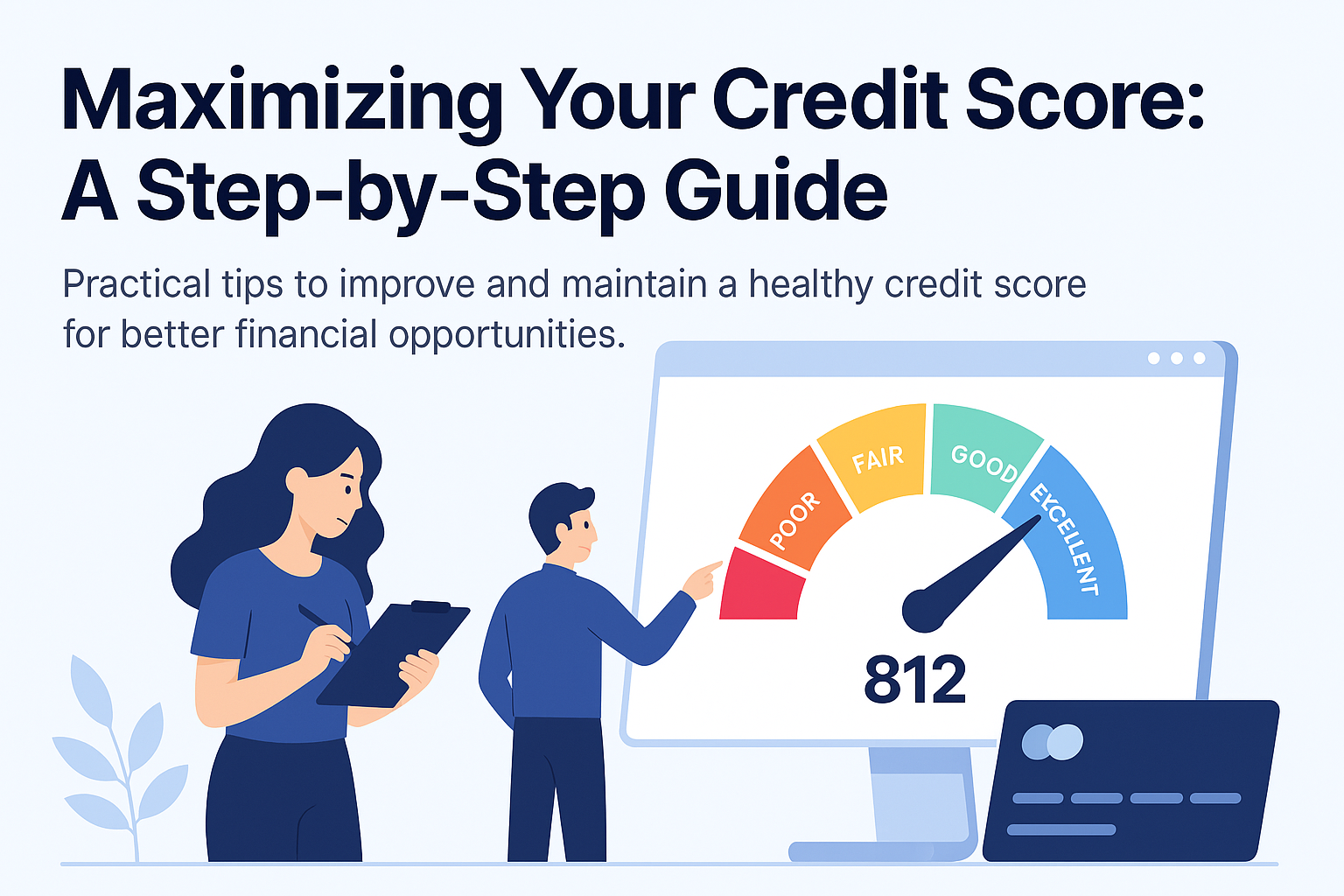
Your credit score may be just a three-digit number, but it has remarkable power over your financial life. From determining whether you qualify for loans to influencing the interest rates you pay, your insurance premiums, and even your rental applications, this number shapes your financial opportunities in significant ways. This guide breaks down exactly how credit scores work and provides actionable steps to improve yours.
Understanding Credit Scores
What Is a Credit Score?
A credit score is a numerical representation of your creditworthiness based on your credit history. In the United States, FICO scores (created by the Fair Isaac Corporation) and VantageScore are the most commonly used models, with scores typically ranging from 300 to 850.
Credit Score Ranges and What They Mean
- Excellent (800-850): Access to the best rates and terms
- Very Good (740-799): Qualify for favorable rates
- Good (670-739): Approved for most loans with competitive rates
- Fair (580-669): May face higher interest rates
- Poor (300-579): Limited credit options, may require deposits or secured credit
What Factors Influence Your Credit Score?
Understanding the components of your credit score helps you focus your improvement efforts effectively:
-
Payment History (35% of FICO Score)
- Whether you've paid bills on time
- How late any payments were
- How recently any late payments occurred
- How many accounts show late payments
-
Credit Utilization (30%)
- The percentage of available credit you're using
- Total balances across all accounts
- Balances on individual accounts
-
Length of Credit History (15%)
- Age of your oldest account
- Average age of all accounts
- How long specific account types have been established
-
Credit Mix (10%)
- Types of credit accounts (credit cards, retail accounts, installment loans, mortgage)
- Having a mix of revolving and installment credit is favorable
-
New Credit (10%)
- Recent applications for credit
- How many new accounts you've opened
- Time since the most recent account opening
Step-by-Step Credit Score Improvement Plan
Step 1: Know Where You Stand
Before making improvements, you need an accurate picture of your current situation:
- Check your credit reports from all three major bureaus (Equifax, Experian, and TransUnion) at AnnualCreditReport.com. You're entitled to one free report from each bureau annually.
- Review for errors such as accounts you don't recognize, incorrect payment statuses, or outdated negative information.
- Dispute inaccuracies directly with the credit bureaus online, by phone, or by mail.
- Monitor your credit score through free services offered by many credit cards, banks, or credit monitoring services.
Step 2: Address Negative Factors
Tackle the issues that are actively hurting your score:
- Bring delinquent accounts current as quickly as possible. Even one late payment can significantly impact your score.
- Set up automatic payments for at least the minimum due to prevent future late payments.
- Negotiate with creditors on accounts in collections. Request "pay for delete" arrangements when possible, where the collection agency removes the negative mark in exchange for payment.
- Create a plan for paying down high balances, focusing on high-interest accounts first while maintaining minimum payments on all others.
Step 3: Optimize Credit Utilization
Credit utilization—the percentage of available credit you're using—significantly impacts your score:
- Aim to keep utilization below 30% across all cards and on each individual card.
- Consider the timing of payments. Credit card companies typically report balances to credit bureaus once a month. Making payments before your statement closing date can lower reported utilization.
- Request credit limit increases on existing accounts if you have a good payment history. Higher limits with the same spending reduce your utilization ratio.
- Keep old accounts open, even if unused, to maintain available credit and account age.
Step 4: Build Positive Credit History
Adding positive information to your credit report:
- Use credit cards responsibly by making small, regular purchases and paying them off in full.
- Consider a secured credit card if you can't qualify for traditional credit. These require a security deposit but report to credit bureaus like regular cards.
- Become an authorized user on a family member's well-established credit card (ensure they have excellent payment history).
- Try credit-builder loans from credit unions or online lenders specifically designed to help establish credit history.
- Use Experian Boost or similar services that add utility and subscription payments to your credit report.
Step 5: Be Strategic About New Credit
New credit applications can temporarily lower your score:
- Limit hard inquiries by only applying for credit you need and are likely to qualify for.
- Research pre-qualification options that use soft inquiries (which don't affect your score) to check your approval odds.
- Time applications strategically. If you need to apply for multiple accounts (like when rate shopping for a mortgage or auto loan), do so within a short period (typically 14-45 days, depending on the scoring model) so they count as a single inquiry.
- Space out credit card applications by at least six months to minimize the impact on your score.
Step 6: Maintain Long-Term Credit Health
Once you've improved your score, maintain it with these habits:
- Review credit reports annually to catch and correct errors.
- Set up account alerts for due dates, balance thresholds, and suspicious activity.
- Keep credit card balances low, ideally paying in full each month.
- Maintain a mix of credit types over time (revolving accounts like credit cards and installment loans like auto loans).
- Limit applications for new credit to when you truly need it.
- Consider keeping your oldest accounts active with occasional small purchases to maintain your length of credit history.
Special Situations and Solutions
Rebuilding After Bankruptcy or Serious Delinquency
- Start with a secured credit card with a reputable bank that reports to all three credit bureaus.
- Consider a credit-builder loan from a community bank or credit union.
- Be patient and consistent. Time is a significant factor in recovery from major negative events.
- Focus on building new, positive history rather than dwelling on past issues.
Building Credit from Scratch
- Start with a student credit card if you're in college, or a secured card if not.
- Consider store cards from retailers you frequent, which often have more lenient approval requirements.
- Look into credit builder loans specifically designed for those with no credit history.
- Ask about rental reporting services that add your on-time rent payments to your credit report.
Managing Credit During Major Life Changes
- Communicate with creditors proactively if you anticipate payment difficulties due to job loss, illness, or other circumstances.
- Ask about hardship programs that may temporarily reduce payments or interest rates.
- Maintain at least minimum payments whenever possible during transitions.
- Monitor your credit more frequently during unstable periods to catch any issues quickly.
Common Credit Score Myths Debunked
Myth: Checking Your Own Credit Hurts Your Score
Truth: Checking your own credit creates a "soft inquiry" that doesn't affect your score. Only "hard inquiries" from lenders when you apply for credit impact your score.
Myth: You Need to Carry a Balance to Build Credit
Truth: Paying your credit card in full each month is ideal for both your credit score and financial health. The card issuer still reports your payment history and utilization to the credit bureaus.
Myth: Closing Unused Credit Cards Improves Your Score
Truth: Closing accounts can actually hurt your score by reducing your available credit (increasing utilization) and potentially shortening your credit history.
Myth: Co-Signing Doesn't Affect Your Credit
Truth: When you co-sign, the account appears on your credit report. Any late payments or high balances will impact your score just as if it were your own account.
The Bottom Line
Improving your credit score is a marathon, not a sprint. While some strategies can boost your score in as little as 30 days, significant improvements typically take 3-6 months, and recovering from serious negative events can take years.
The good news is that your most recent credit behavior carries more weight than past mistakes. By consistently following the steps outlined in this guide, you can steadily improve your score and open doors to better financial opportunities.
Remember that your credit score is just one aspect of your financial health. While it's important to maintain good credit, balancing this goal with other priorities like saving for emergencies, investing for the future, and living within your means creates the strongest foundation for long-term financial success.